
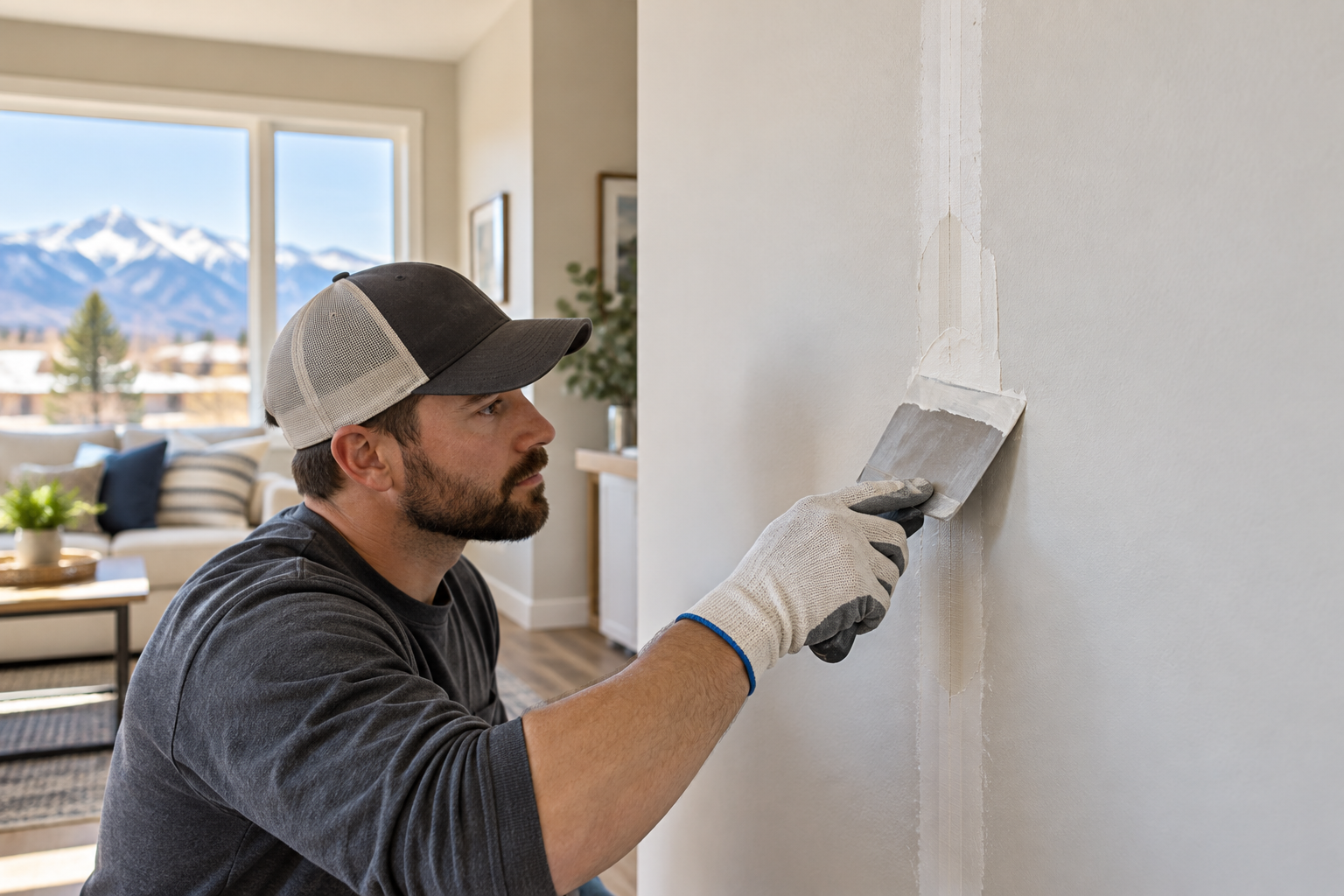
Not every crack means the same thing
Drywall cracks can develop along seams, corners, ceilings, or broad wall surfaces. Some are limited to the finish, while others continue to reopen because the underlying joint or surface is moving. The right repair depends on what the damaged area is doing over time.
Common drywall crack patterns
Hairline cracks may appear near joints or corners. Cracks can also develop where panels meet, where a previous repair failed, or around areas that experience normal movement. The visible pattern, width, location, and whether the crack returns are all useful details.
Why recurring cracks deserve attention
Simply filling a crack and repainting can produce a temporary cosmetic improvement. If the same crack returns, the area should be evaluated rather than repeatedly covered. A recurring crack can mean the repair method, joint condition, or another underlying issue needs attention.
What you can check at home
Look at walls and ceilings in normal daylight. Note cracks that are expanding, reopening, or appearing with other signs such as staining, soft drywall, loose texture, or damaged corners. If water is involved, correct the moisture source before cosmetic drywall work.
Repairing the visible problem
Once the condition is understood, a repair may involve preparing the damaged area, reinforcing or retaping a joint when appropriate, applying compound in controlled layers, sanding, and restoring the surrounding finish. Learn more about drywall crack repair and texture matching.